While presenting to any group of people can be intimidating, presenting to former colleagues can be especially challenging. This is because those who attend the presentation have known you prior to the promotion, the resume, and your growth into the person delivering the presentation today. They remember the early years, the errors, the awkwardness of learning, and the struggles of discovering who they were then.
That is why presenting to former colleagues is so important. It allows you to show the world your humility, clarity, and confidence. And, when you do it correctly, it provides you with some of the most memorable presentations you will ever give.
There are examples all around us of how a presentation to former colleagues can be used to show that the importance of growing as a person, and sharing those experiences, is not only important, but crucial to how others view you.
A Recent Example Shows Exactly How Powerful This Can Be
A recent example is Dr. Alexander Eastman’s return to the Washington–Baltimore region where he had early medical exposure in Montgomery County, Maryland.
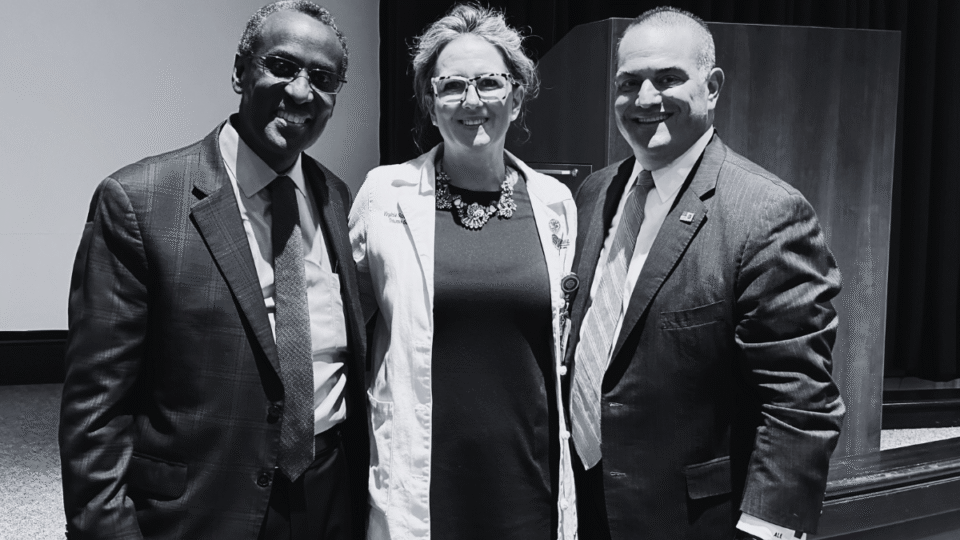
In the Washington–Baltimore region, Dr. Alexander Eastman returned to deliver a keynote address at a major trauma conference. Decades ago, he had early medical exposure in Montgomery County, Maryland. During that time, he gained insight into how teams perform under pressure, how split-second decisions can greatly impact outcomes, and how effective communication is critical when minutes matter.
In his keynote, he spoke about crisis leadership and the importance of preparation, decision-making, and communication – principles he believes are key to successfully leading through complex emergencies.
The audience included trauma surgeons, emergency physicians, EMS crews, nurses, residents, and students from across the region.
This was truly a full-circle moment, and the audience felt it immediately.
However, there is nothing unique about this situation. What made his presentation successful, however, was not specific to trauma care or emergency response; rather, his approach has universal implications for anyone who must present to former colleagues and command a room.
Why Presenting to Former Colleagues is Different
Understanding why presenting to former colleagues differs from other types of presentations is helpful in developing strategies for effectively communicating with an audience who has seen you grow.
They remember your early days. As a result, you may feel pressured to prove how far you’ve developed.
You know their culture. While this can provide an advantage, it can also increase your anxiety levels.
They have expectations. Some may expect your presentation to be polished; others may expect you to be the same person they remembered.
You want their respect. Your desire for respect can distract you from effectively communicating.
Dr. Eastman’s return to Suburban Hospital demonstrates that the key to presenting to former colleagues is not to try to impress them with perfection, but to demonstrate your growth, your path, and the lessons you’ve learned along the way.
Tip 1: Begin with the Story Only You Can Tell
People connect with stories better than they do with accomplishments.
Dr. Eastman began his presentation by discussing his roots at Suburban Hospital. He didn’t hide the fact that this was a developmental site for him. He incorporated it into the presentation.
In doing so, he achieved two goals:
He disarmed the audience. Your former colleagues don’t need you to pretend you’re someone you aren’t.
He humanized himself. He reminded the audience that they had been a part of a chapter in his development.
As you prepare to present to your former colleagues or organization, reflect on your first memories, the lessons you learned, or a moment that helped define your path.
A personal anecdote – short, sincere, and related to the topic – will draw the audience in immediately.
Tip 2: Focus on the Value, Not the Resume
Most speakers make the mistake of taking too long to explain what they’ve accomplished since leaving.
Dr. Eastman sidestepped this issue by rapidly moving from his background to the focus of the presentation: leadership skills for high-pressure situations.
His credibility was evident, yet he didn’t feel compelled to recount each of his accomplishments.
As you present to your former colleagues:
You should assume they already know your fundamentals.
You should reveal enough history to create a connection.
You should move on to the knowledge they can utilize right now.
Remember, you are demonstrating your progress through your ideas, clarity, and mannerism-not by listing titles.
Tip 3: Utilize Analogies to Show Your Ideas Are Universal
One of the most impressive aspects of Dr. Eastman’s speech was the analogies he created to link trauma care to other high-pressure scenarios. He talked about tactical law enforcement, disaster response, and federal emergency response.
Analogies serve as bridges. They enable the listener to take the lesson and translate it into their own world.
You can achieve the same results.
If you are presenting to your former sales team:
You can relate your experiences to coaching, negotiating, or even playing a sport.
If you are presenting to your former teachers:
You can equate classroom management to team leadership.
If your audience is comprised of healthcare workers:
You can equate communication in emergencies to communication in any rapidly changing situation.
Analogies are important because they help make your ideas more applicable to a wider range of people.
Tip 4: Dominate the Room Using Simple, Easy-to-Understand Language
A common misconception is that presenters must “sound intelligent” to impress former colleagues. In truth, the best way to dominate the room is to use clear, concise, simple language.
Dr. Eastman frequently stressed concepts such as preparedness, communication, and post-emergency review. Although these were easy to understand, they were meaningful because they were grounded in real-world experiences.
Simple-to-understand language does not diminish your authority; it enhances it.
When developing your own presentation:
Use short phrases.
Focus on essential information.
Don’t overexplain.
Talk as if you were teaching, not trying to impress.
Your objective is to communicate clearly-not to appear complicated.
Tip 5: Instead of Slides, Use “Leadership Moments”
People do not recall slides. People remember moments.
Dr. Eastman illustrated various moments of leadership throughout his career. These moments included witnessing a team respond to chaos, making critical decisions, and times when preparation saved lives.
These moments serve as anchors. They render abstract concepts tangible.
When presenting to your former colleagues, consider the following:
A moment when your team taught you something.
A moment when something nearly failed.
A moment when success resulted from teamwork, not fortune.
Describe these stories with humility and detail. They will stay with your audience long after the meeting.
Tip 6: Recognize the Expertise in the Audience
There is no quicker way to disarm an audience than to acknowledge their experience.
Dr. Eastman acknowledged that the audience consisted of trauma clinicians, many of whom make life-and-death decisions on a daily basis. He recognized that reality and positioned his message as an extension, not a replacement, of the knowledge they currently possess.
When you present to your former colleagues:
You should recognize their expertise.
You should appreciate the work they continue to perform.
You should express your insights as additions, not corrections.
This fosters collaboration rather than separation.
Tip 7: Remain Grounded and Authentic
Audiences can detect when a presenter is attempting too hard. Audiences can also detect when a presenter is grounded and honest.
Dr. Eastman demonstrated genuine gratitude for returning to the site of his origin. He was transparent regarding the significance of returning to that location. That genuineness fostered a deeper connection.
If you are presenting to people from your past, allow a portion of that significance to shine through.
Express why this presentation is significant to you.
Reflect on who you were when you worked with them.
Allow them to observe the individual beyond the professional.
Authenticity is one of the quickest ways to build trust.
Tip 8: Provide the Audience with a Clear, Actionable Message
At the center of Dr. Eastman’s keynote was a single concept:
Preparing is not thrilling, but it is the most valuable thing we do.
One sentence.
Easily understandable.
Unforgettable.
Each presentation, whether to former colleagues or otherwise, should conclude with a message similar to this.
Consider the following questions:
Is there one idea I would like them to carry away with them?
Can I state it in one simple sentence?
If your response is affirmative, you have offered them a gift.
The Larger Context: Why This Is Important
Presenting to former colleagues is not simply about speaking well. Presenting to former colleagues is about standing in front of people who shaped your early career and providing them with the lessons you’ve learned since.
It’s about recognizing the past while contributing something beneficial to the current day.
It’s about the relationship, the humility, and the development.
And it is about realizing that the individuals in the room are not criticizing you-they are the people who stood beside you before.
Dr. Alexander Eastman’s return to Suburban Hospital exemplifies how effective this can be. Dr. Eastman’s talk combined experience, storytelling, simplicity, and respect, allowing everyone in the room to engage with the presentation.
Regardless of whether you are in the healthcare industry, business, education, technology, or any other area, the fundamental principles remain the same:
Begin with your narrative.
Lead with worth.
Be simple.
Utilize analogies to enhance comprehension.
Remain authentic.
Leave the audience with a message they can immediately apply.
When you accomplish this, you will not only dominate the audience-you will reunite with the individuals who aided in shaping your path.