
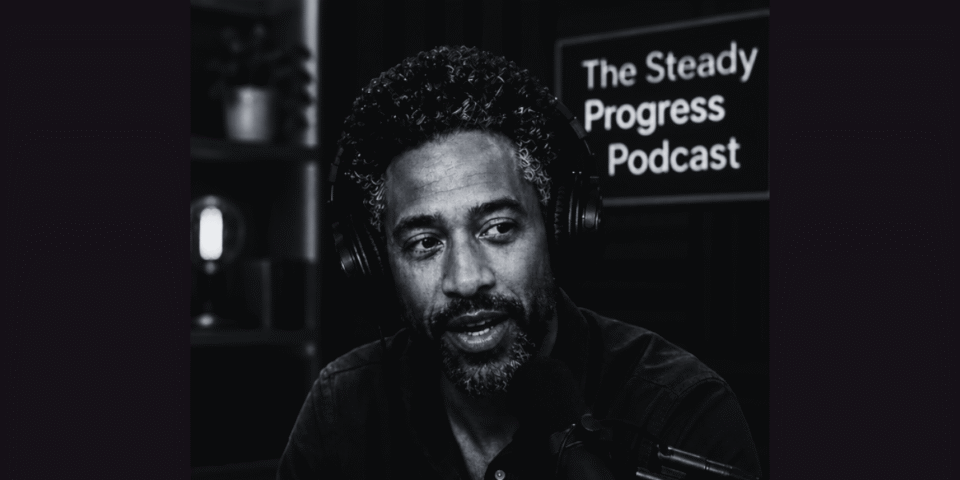
An engaged podcast comes from preparation, not luck. Ahadu Asres Legesse, a senior project manager from Anoka, Minnesota, who is developing The Steady Progress Podcast, plans each episode the way he plans a project: a clear purpose, a run of show, guests chosen for what they add, room for natural banter, and real stories with a lesson. Then he keeps the rhythm steady so listeners know when to come back.
Anyone who has stood in the wings before a show knows the feeling. The audience is out there, the lights are about to change, and everything depends on what you prepared. Podcasting is a quieter stage, but the same rules apply. Listeners can leave at any second, and most do when an episode drifts, rambles or forgets who it is for.
Ahadu Asres Legesse is building his podcast with that in mind. After more than 28 years in business operations and project management across the Minneapolis–St. Paul area, including roles at Target, U.S. Bank, Medtronic and UnitedHealth Group, he is developing The Steady Progress Podcast, a planned series of practical conversations about work, leadership and career growth set to launch in January 2027. His approach borrows heavily from the habits that kept his projects on track, and it offers useful lessons for performers, speakers and anyone thinking about starting a show of their own.
Start With a Show Plan, Not a Microphone
Many podcasts start with equipment and a vague idea. Legesse starts with a plan. Before recording, he defines who the show is for, what each episode should leave listeners with, and how often new episodes will arrive. The Steady Progress Podcast is planned at two episodes per month, each about 20 to 30 minutes, aimed at project managers, business professionals and recent graduates.
That rhythm matters more than most new hosts expect. In project management, Legesse has long relied on regular, predictable updates because people trust what arrives on schedule. Audiences work the same way. A show that publishes on a steady rhythm becomes a habit; a show that disappears for a month has to win its listeners back.
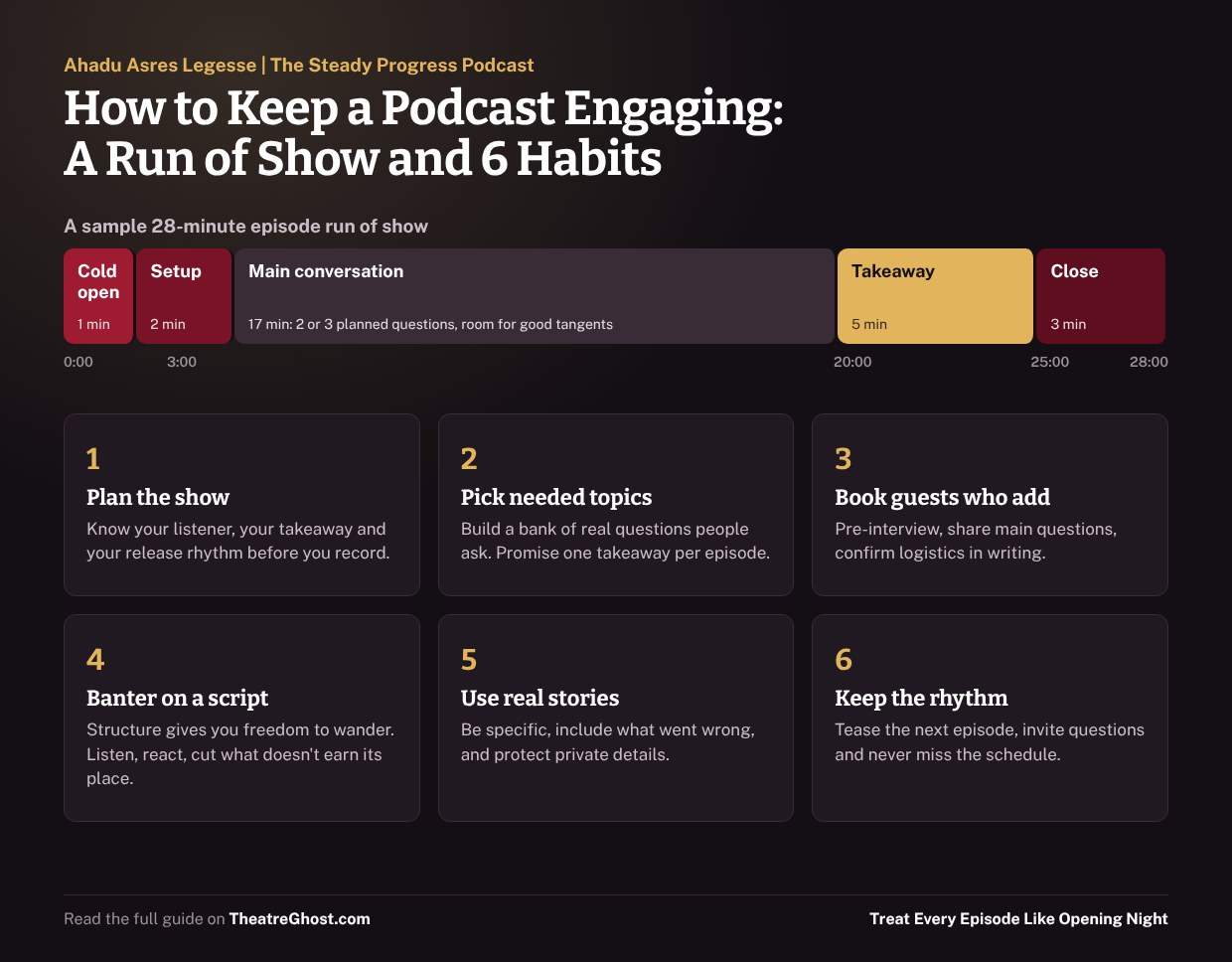
He also treats each episode like a small project with a run of show. A simple structure, like the one below, keeps a conversation focused without making it stiff.
| Segment | Time | Purpose |
|---|---|---|
| Cold open | 0:00 to 1:00 | A quick story or question that tells listeners why this episode matters |
| Welcome and setup | 1:00 to 3:00 | Introduce the topic, the guest and the one takeaway to listen for |
| Main conversation | 3:00 to 20:00 | Two or three planned questions, with room to follow good tangents |
| Practical takeaway | 20:00 to 25:00 | One specific action listeners can try this week |
| Close and next time | 25:00 to 28:00 | Thank the guest, tease the next episode, invite questions |
Choose Topics Listeners Actually Need
The fastest way to lose an audience is to talk about what interests the host instead of what helps the listener. Legesse’s planned episode list shows the opposite instinct. Early topics include The Value of Showing Up Consistently, Good Project Management Starts With Listening, Lessons From a Career in Business Operations, Why Small Improvements Lead to Bigger Results, Balancing Work, Health, and Personal Goals and Building a Career and Community in Minnesota. Each one answers a question real people ask at work.
A few habits help keep topics sharp:
- Keep a topic bank. Write down questions colleagues, students or audience members ask you. Recurring questions make the strongest episodes.
- Promise one takeaway. If you cannot say in a sentence what listeners will gain, the topic is not ready.
- Mix the familiar with the specific. “Communication” is broad. “How to send a status update leaders actually read” is an episode.
- Plan a season, not a single episode. Mapping six episodes ahead, as Legesse has, prevents last-minute scrambling and gives the show a clear identity.
Book Guests Who Add Something
Guests can lift a show or flatten it. The best ones bring a perspective the host cannot. For a career-focused podcast like Legesse’s, that might mean a recent graduate navigating a first job, a coordinator moving into project management, or a leader who has managed a difficult change. The value is in the contrast and in the honest detail.
Preparation makes the difference. A short pre-interview call helps a host learn which stories a guest tells well and which topics to avoid. Sharing the main questions in advance lets guests think, while keeping follow-up questions unscripted preserves energy. Legesse’s project background points to one more step: confirm logistics in writing, including the recording time, the format and how the episode will be shared. Guests who feel organized and respected relax, and relaxed guests are far more engaging.
Banter Works Best With a Script Underneath
Natural banter is one of the main reasons people choose podcasts over articles. It makes a show feel like a conversation among friends. But the best banter is usually supported by structure. When the host knows where the episode is going, there is freedom to wander for a minute and still find the way back.
Theatre people will recognize this. Improvisation lands when performers trust the scene’s structure and listen closely to each other. The same is true on a microphone. Legesse has said that good project management starts with listening, and that principle makes conversation better too. Reacting to what a guest actually says, rather than waiting for a turn to speak, is what turns an interview into a real exchange.
A few guardrails keep banter from swallowing the episode. Keep it short, avoid inside jokes the audience cannot follow, and cut anything in editing that does not earn its place. A good rule of thumb is that every tangent should either reveal something about the people talking or bring the listener closer to the topic.
Real Life Experience Is Your Best Material
Audiences remember stories far longer than advice. Legesse’s career gives him plenty to draw from: starting in operations support at Target in 1998, moving from project coordinator to project manager at U.S. Bank, reviewing workflows at Medtronic and leading cross-functional projects at UnitedHealth Group. The lesson for any host is to look for specific moments, such as a deadline that slipped, a meeting that changed a project’s direction, or a small habit that made a big difference.
Three things make real experience work on air:
- Be specific. A detail about a real situation is more convincing than a general principle.
- Include what went wrong. Honest mistakes build trust with listeners faster than polished success stories.
- Protect confidences. Share the lesson, not private details. Leave out names, internal numbers and anything a former colleague or employer would not want made public.
Rehearse Like It Is Opening Night
Podcasting is public speaking without a visible audience, and the same preparation applies. Warm up your voice. Read your opening aloud until it sounds like you talking, not reading. Mark the transitions in your notes so you never stall between segments. Recording a short pilot episode that nobody else hears is one of the best ways to find awkward pacing before listeners do. For more ways to build confidence at the microphone and on stage, explore our public speaking guides.
Give Listeners a Reason to Come Back
Engagement is not only about a single episode. It is about the next one. End every show by telling listeners what is coming, invite their questions for future episodes, and write simple show notes that summarize the takeaway. Above all, keep the schedule. For Legesse, that consistency is the point. The name of his podcast reflects the same idea that shaped his career: steady progress, built one dependable step at a time.
To learn more about Ahadu Asres Legesse and follow the launch of The Steady Progress Podcast, visit Ahadu Asres Legesse’s website.
