
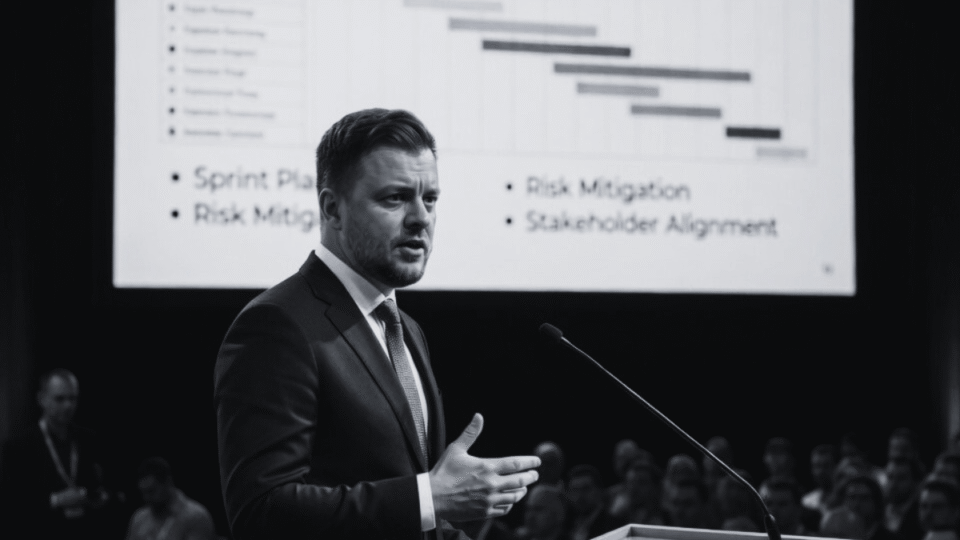
There is a particular kind of pressure that comes with being the most technically knowledgeable person in a room full of people who do not share your vocabulary. You know the material. You have lived it. The challenge is not what you know. It is how you make someone else feel it the same way.
Brian Vientos knows that pressure well. A certified Project Management Professional with 17 years at Six Flags Great Adventure in Jackson, New Jersey, he has spent his career managing capital projects worth two to eight million dollars each, coordinating multi-contractor teams, tracking safety compliance, and delivering results that are literally visible to three million visitors a season. He has also had to explain all of that to rooms full of people who are not engineers, not project managers, and not particularly interested in the difference between a Lean Six Sigma Green Belt and a PMP credential.
What he has learned about translating complex work into clear communication is the part of his career that deserves more attention. Because whether you are presenting at a PMI chapter event, leading a stakeholder briefing, or stepping in front of a room to explain something you understand deeply and your audience does not yet, the challenge is the same. You are performing. And the performance requires preparation that most technical professionals skip entirely.
The Most Common Mistake Technical Presenters Make
When experts present to non-experts, the temptation is to lead with proof. Here is the methodology. Here are the frameworks. Here are the numbers that confirm I know what I am talking about. The expertise is real. The instinct to demonstrate it up front is also real. But it almost never lands the way the presenter intends.
Audiences do not need proof before they care. They need a reason to care before they will engage with proof.
Brian’s career provides an easy example of how this works in reverse. If you ask someone whether they care about capital project management at a theme park, they probably shrug. If you tell them that every ride they rode last summer, every upgrade to their favorite attraction, every new experience their kids are going to remember, came from a project that someone had to plan, coordinate, and deliver on time and on budget against a compressed seasonal window, the subject becomes something else entirely. The technical reality did not change. The entry point did.
The best technical presenters understand that you earn the right to share your expertise by first connecting it to something the audience already finds meaningful. That is not dumbing it down. That is good storytelling. TheatreGhost covers this exact principle in the context of calming nerves before a presentation, and it applies equally to how you structure what you actually say once you are up there.
What a PMP Presentation Teaches About Structure
The Project Management Professional framework is built around a specific kind of discipline: you define scope, manage stakeholders, track risk, and deliver to a plan. What most people do not realize is that a well-structured presentation follows the same logic.
You define scope by deciding what the presentation is actually about, not everything you know, but the specific thing the audience needs to leave with. You manage stakeholders by understanding who is in the room, what they already believe, what they are hoping to hear, and what would surprise them. You track risk by anticipating the questions that could derail the conversation and preparing honest answers instead of hoping the questions do not come. And you deliver to a plan by knowing your opening, your throughline, and your close before you step into the room.
Brian’s track record, a 98% on-time completion rate and consistent delivery under budget across eight to twelve projects per year, is built on exactly this kind of front-loaded preparation, as OCNJ Daily reported in their 2026 feature on his work. He identifies problems before they become schedule impacts. That same instinct, find the gap before it finds you, is exactly what separates a tight, confident presentation from one that drifts and loses the room.
The Stage Discipline That Technical People Often Skip
Performers rehearse. Athletes practice. Project managers who present mostly wing it.
That gap explains a significant share of why technically brilliant people give forgettable presentations. They know the content. They assume that knowing it is sufficient. But knowing something and communicating it under mild pressure to a live audience are genuinely different skills, and only one of them improves through rehearsal.
If you are preparing to present on project management, PMP methodology, or any technical subject, say the presentation out loud at least twice before you give it. Not in your head. Out loud, at speaking pace, with your slides or notes in front of you. You will find within the first thirty seconds that the version in your head and the version that actually comes out of your mouth are not the same. The rehearsal is where you close that gap.
TheatreGhost has written about presenting to audiences who already know you, which is an especially relevant read for anyone stepping in front of colleagues or industry peers where the social stakes feel higher than usual. That piece covers the specific challenge of presenting to people who knew you before you became the expert in the room, which is exactly the situation many project managers face at PMI chapter events and professional development sessions.
What Brian’s Career Demonstrates About Presence
There is something worth noting about the way Brian Vientos has built his public profile. He is a practitioner who has let his results speak for him, and those results have drawn coverage from Business Journal, OCNJ Daily, and others not because he sought the attention but because the numbers warranted it. A 98% on-time completion rate. Two Project Excellence Awards. Consistent delivery under budget across a portfolio that would be demanding in any industry.
That quiet confidence, leading with what you have done rather than with what you want people to think of you, is also a presentation principle. The presenters who command a room most easily are rarely the ones who announce their credentials. They are the ones who earn attention by immediately making the audience feel the value of their time. That is a skill you can learn. It is also, not coincidentally, the first thing a good actor or performer learns about working a live audience.
Whether you are presenting on PMP methodology, leading a team briefing, or stepping into any speaking situation where your expertise needs to land with people who do not share your background, the fundamentals hold. Know why the audience should care before you show them what you know. Prepare your structure the way you would prepare a project plan. Rehearse out loud. And trust that expertise delivered clearly is more compelling than expertise delivered completely.
You can connect with Brian Vientos on LinkedIn and learn more about his work at brianvientos.com/biography. For more on the craft of presenting under pressure, explore the Public Speaking and Education sections here at TheatreGhost. And if you are building a presentation about your own professional field, the performance principles Kallie Boxell brings to high-stakes professional conversations apply just as directly to a conference stage as they do to an interview room.
